Which of the Following Best Describes the Resting Membrane Potential
Po-tenshal existing and ready for action but not active. When there is a resting potential the outside of the axon is negative relative to the inside.

A P Chapter 11 Action Potential Flashcards Quizlet
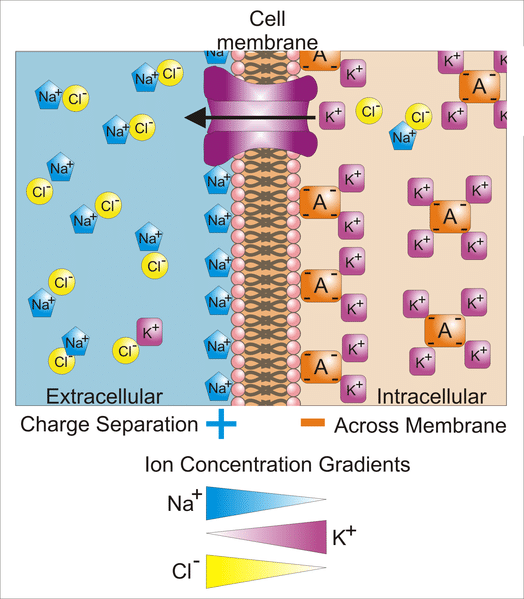
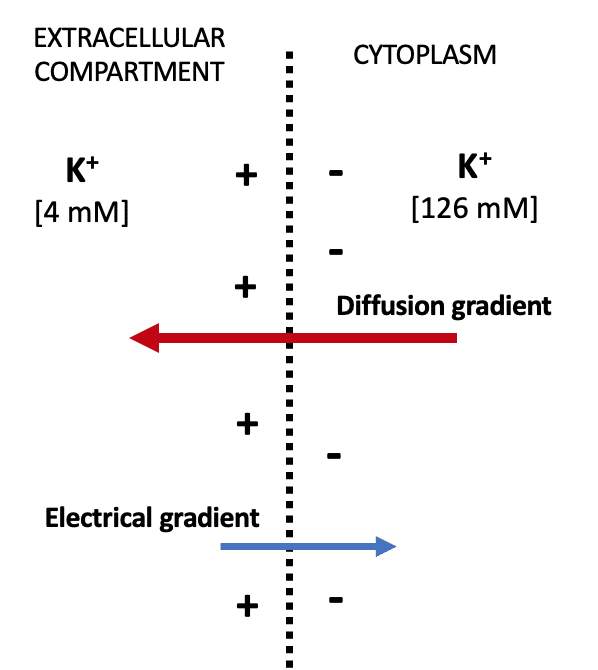
The force on sodium ions is to move out of the cell and the force on potassium is to move into the cell.
. K ions diffusing out of the axon repolarizes it. Group of answer choices. During an action potential Na ions diffuse out of the axon.
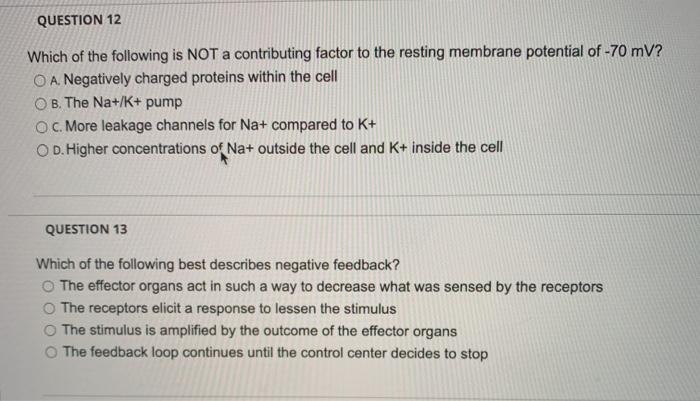
A Activation gates are open and inactivation gates are closed. C The extracellular environment is negatively charged D It has a voltage of about 75 mV. The action of these pumps combined with the diffusion of certain ions through protein channels in the membrane results in a resting membrane potential of approximately 70mV with respect to the inside of the cell.
A resting membrane potential or a non-signalling neuron can effectively function by ion pumps and ion leaks both. A nerve impulse causes Na to enter the cell resulting in b depolarization. A voltage difference across the plasma membrane with more positive membrane potential inside.
It reads -70 mV. Which of the following best describes the status of sodium channels at the resting membrane potential. At the peak action potential K channels.
Which of the following best describes the electrochemical forces acting on sodium and potassium ions at the resting membrane potential. It reads -80 mV. The membrane potential is maintained by the passive transport of anions into the cell to create a diffusion force.
The resting membrane potential is approximately -70 mV so the sodium cation entering the cell will cause the membrane to become less negative. A resting or a non-signalling neuron has a potential difference across its membrane which is the resting membrane potential. The first voltmeter shows hyperpolarization.
Auditory evoked potential in electroencephalography changes in waves in response to sound. Thus option a is the right answer. Its typical value lies between -60 and -70 mV for most neurones.
Which of the following best describes the resting membrane. Which of the following describes the resting membrane potential of a neuron. The inside of the neuron is positive about 70 mV compared to the outside of the neuron.
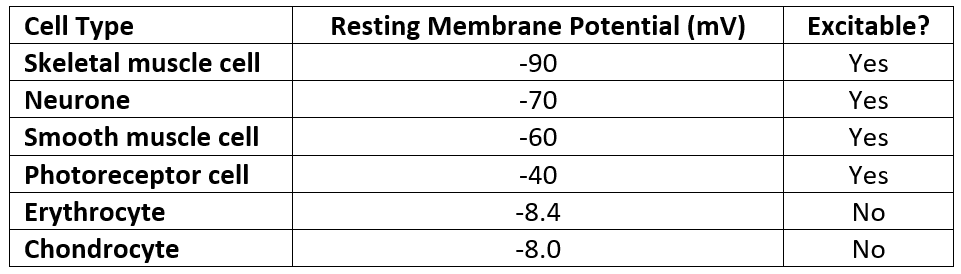
Traditionally the electrical potential difference across a cell membrane is expressed by its value inside the cell relative to the extracellular environment. The membrane potential of the electrically inactive neurones is known as the resting membrane potential. A The intracellular environment is negatively charged.
The resting membrane potential of a cell is defined as the electrical potential difference across the plasma membrane when the cell is in a non-excited state. The resting membrane potential of a nerve cell is -70 mV which indicates that the intracellular region of the nerve cell has a negatively charged environment in comparison to the extracellular environment. Which of the following is FALSE regarding the membrane potentialA The resting membrane potential is maintained by solely by passive transport processesB In their resting state all body cells exhibit a resting membrane potentialC The resting membrane potential is determined mainly by the concentration gradients and differential permeability of the plasma.
The third voltmeter shows depolarization. The principal conductances responsible for establishing the resting membrane potential are that of chloride potassium and sodium. Diagrams of voltmeters with one electrode inside the cell and one in the fluid outside of the cell.
B The intracellular environment has more positively charged sodium. Chloride conductance is large in skeletal muscle fibers in which it is mediated by skeletal muscle chloride channels. At rest there is no potential between the inside and outside of the neuron.
The a resting membrane potential is a result of different concentrations of Na and K ions inside and outside the cell. It has three presynaptic inputs-from neurons X Y and Z. A postsynaptic neuron has an RMP of -70mV and a typical threshold of -55mV.
A a concentration gradient that exists between the intracellular and extracellular fluids B the differences that exist between excitable cells and nonexcitable cells C an electrical gradient that exists between the intracellular and extracellular fluids. Which of the following describes the membrane potential maintained by the sodium potassium pump. A voltage difference of 0 millivolts mV across the membrane.
The resting potential is ascertained by the concentration level of ions across the membrane and by membrane resistance to ions. It is only during an action potential that there is a difference. When X and Y are stimulated simultaneously the postsynaptic neuron depolarizes by 1 mV.
In this article we will explore how resting potential is generated how to calculate its approximate value and how changes in resting membrane potential may lead to significant pathology. The second voltmeter shows the resting potential. D Activation gates and inactivation gates are open.
This is known as depolarization meaning the membrane potential moves toward zero becomes less polarized. If X fires 10 times and Y fires 10 times. After-potential the period following termination of the spike potential.
It reads 40 mV. In this steady-state condition no further differences in charge will accumulate. Electric tension or pressure.
At the resting membrane potential of neurons potassium is at equilibrium D at -94 mV the chemical force for potassium movement is opposed exactly by the electrical force E at -94 mV the electrical force for potassium movement is zero. The membrane potential is maintained by moving sodium ions extracellularly and potassium ions intracellularly. 131 Which of the following best describes the resting membrane potential RMP.
The resting membrane potential is changed to an action potential at 30 mV charge on it. 12 The resting membrane potential is the result of. A voltage difference across the plasma membrane when the neuron has been stimulated.
C Activation gates and inactivation gates are closed. Stimulation of neuron X causes the postsynaptic neuron to depolarize by 05 mV. Which of the following best describes the resting potential of a neuron membrane.
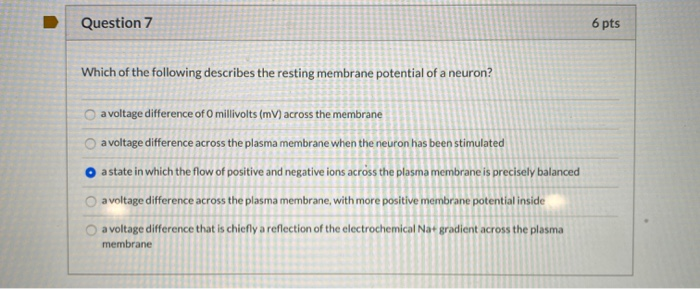
Which of the following statements best describes the resting membrane potential. The best description of the neuron resting membrane potential is a state in which the flow of positive and negative ions across the plasma membrane is precisely balanced. Action potential see action potential.
Impulses in the axon travel towards the cell body. See also brainstem. B Activation gates are closed and inactivation gates are open.

At Rest A Human Neuron Has A Membrane Potential Of 70mv Which Of The Following Statements Best Explains How The Negative Membrane Potential Is Generated A The Lipid Bilayer Is Highly Permeable
Solved Question 7 6 Pts Which Of The Following Describes The Chegg Com

The Neuron Neurons Nervous System Medical School Studying

Pin On Mcat Study Stuff
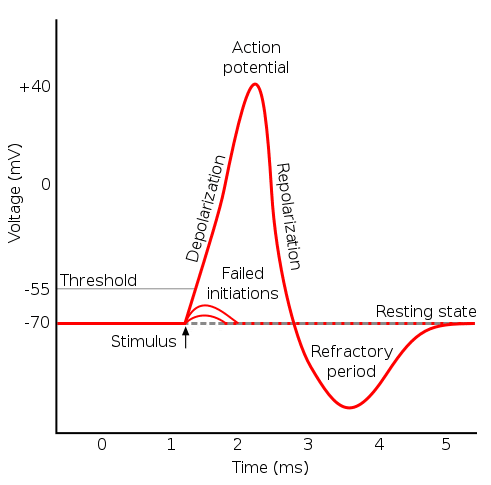
Action Potential The Resting Membrane Potential Generation Of Action Potentials Teachmephysiology

Exam Name Multiple Choice Choose The One Alternative That Best Completes T School Reviews Human Anatomy And Physiology Exam
Solved Question 7 6 Pts Which Of The Following Describes The Chegg Com

Resting Membrane Potential Medical Knowledge Biology Lessons Anatomy And Physiology
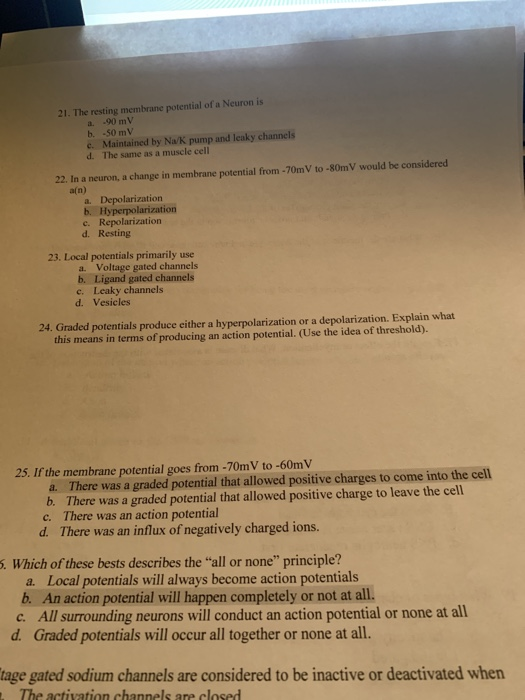
Solved 21 The Resting Membrane Potential Of A Neuron Is A Chegg Com
12 Membrane Potentials Simplemed Learning Medicine Simplified
Action Potential The Resting Membrane Potential Generation Of Action Potentials Teachmephysiology
What Is The Resting Membrane Potential And What Is Its Importance Quora

Resting Membrane Potential Easy And Simple Explanation Biology Notes Dental Hygiene School Class Notes

1 The Resting Membrane Potential A Is Much Closer To The
Resting Membrane Potential Nernst Generation Teachmephysiology
Solved Question 12 Which Of The Following Is Not A Chegg Com
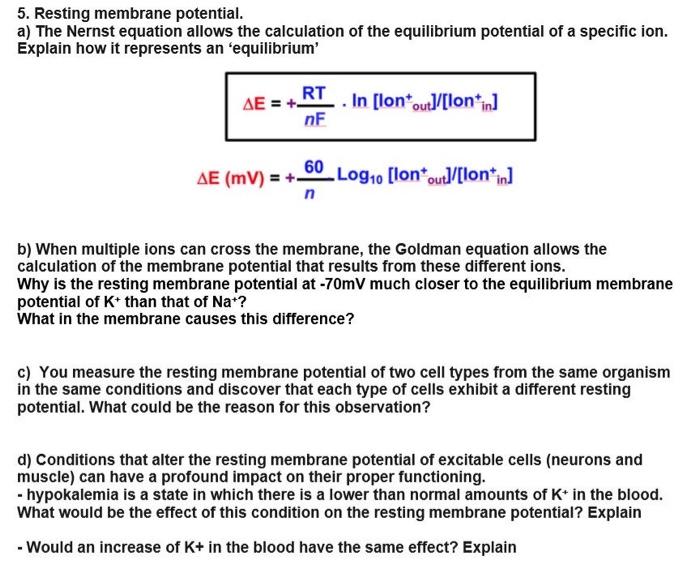
Solved 5 Resting Membrane Potential A The Nernst Equation Chegg Com
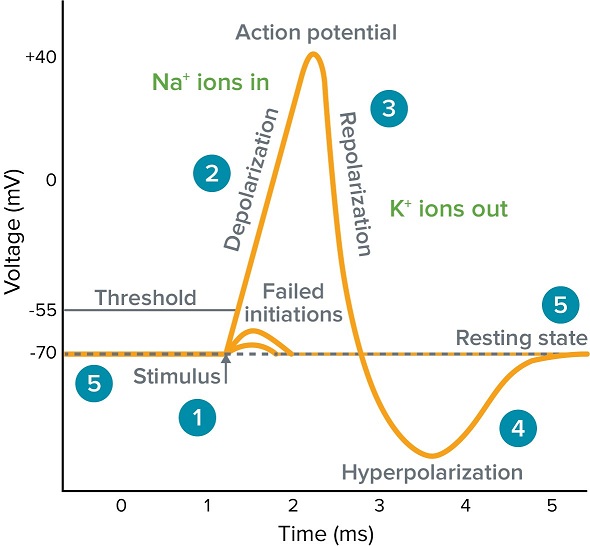
What Is An Action Potential Action Potential Chart Membrane Potential Molecular Devices
What Is A Membrane Action Potential Quora


Comments
Post a Comment